
Short answer
Start with what you want to make. Buy a scroll saw for detailed patterns and interior cuts, a bandsaw for curves and preparing thicker stock, or a wood lathe for bowls, spindles, and other round forms. Then plan space, power, and dust collection around that one machine before you add another.
Key points
- This guide compares the three machine types EXMAC sells. If your projects are mostly straight cuts, you may need a different tool first.
- Choose the machine that does the most important operation in your next few projects.
- These three machines overlap at the edges, but one does not replace another.
- Add a second machine only when your current work shows you need it.
What is the difference between a scroll saw, a bandsaw, and a wood lathe?
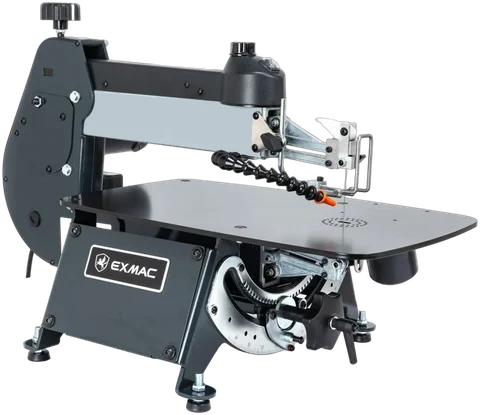
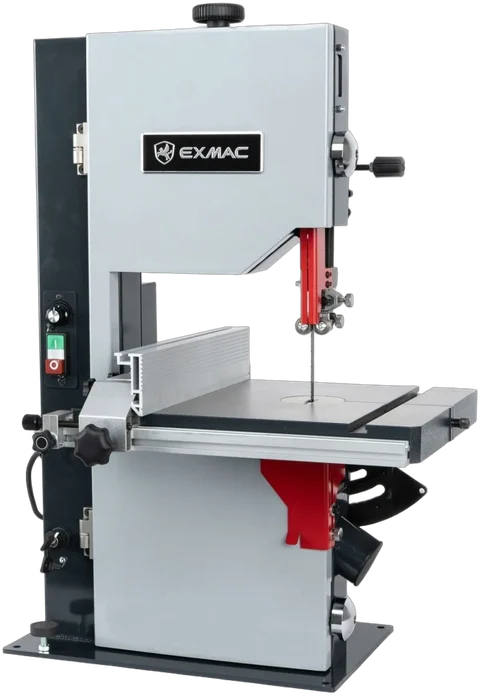
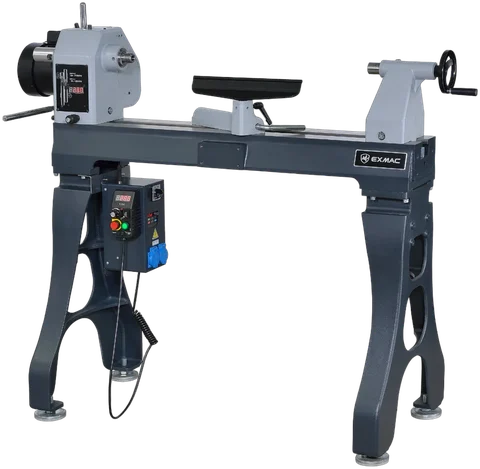
A scroll saw moves a thin blade up and down for fine curves and interior cuts. A bandsaw runs a continuous loop of blade for curves and for cutting through thicker stock. A wood lathe spins the workpiece while you shape it with a handheld tool. Each one does something the others do not do well.
- Fine patterns and interior cutsScroll saw
- Curves, thicker stock, and resawingBandsaw
- Bowls, spindles, and round formsWood lathe
- Mostly straight cutsAnother tool first
| Machine | Good for | EXMAC models |
|---|---|---|
| Scroll saw | Fretwork, ornaments, puzzles, and inlays | EX16, $649.99; EX21, $699.99 |
| Bandsaw | Curved parts, resawn boards, and rough stock | BS11EV, $1,499.99; BS15, $2,999.99 |
| Wood lathe | Bowls, spindles, handles, and platters | EL16, $3,099.99; EL20, $4,299.99 |
Prices are from the product pages at the time of this update, and they vary widely by machine type. See each product page for current price and availability.
How do you decide which machine to buy first?
Use a simple method that keeps the decision tied to work you actually plan to do.
- Write down three projects you genuinely expect to build in the next six months.
- Identify the hardest operation in each: fine interior cuts, curves in thick stock, or turning round forms.
- Choose the machine that performs it. If the hardest operation is something else, such as long straight cuts, this may not be the right first purchase.
- Check the full cost: the machine, delivery, and what it needs to run, such as blades, or turning tools and workholding for a lathe.
Avoid buying from a maximum-capacity figure you may never use. The right first machine is the one that makes a specific project possible and fits your current shop safely.
When a scroll saw comes first
A scroll saw makes sense when fine curves and interior cuts define the project. It works on a bench, which suits a smaller shop. It also has the lowest price of the three types at EXMAC. Read how to choose a scroll saw to compare the EX16 and EX21.
When a bandsaw comes first
A bandsaw makes sense when you work with curved parts and thicker boards, or want to resaw your own stock. It needs a clear path for the material. Read how to choose a bandsaw to compare the BS11EV and BS15.
When a wood lathe comes first
A lathe makes sense when round forms are what draw you in. It is a specialized machine with its own tools and workholding, so budget for those and for instruction. Read how to choose a wood lathe to compare the EL16 and EL20.
What does a basic woodworking shop need?
Your first setup should support safe, repeatable work, not every future idea. That means a stable machine position, a clear material path, enough light, the correct power, dust control, and a place for blades, tools, guards, and the manual.
Space and movement
Measure more than the machine. Include your longest board or largest pattern, where you load the work, where you stand or sit, doors and panels, dust hoses, and your way out. Masking tape on the floor or bench is an easy way to rehearse the work before delivery.
Power
Product names, horsepower, input voltage, and recommended circuit are all different specifications. Before you order, ask EXMAC for the required voltage and circuit, and have a qualified electrician confirm your shop can supply it.
Dust and cleanup
Dust collection has to match the operation without blocking controls, guards, the work, or service panels. Fine dust and large chips behave differently, especially around a lathe. Plan capture, room air, personal protection, and cleanup together.
What should you check before you buy your first machine?
- The project: you can name the specific work this machine will do first.
- Space: the machine, the material path, and your working position all fit.
- Power: before you order, ask EXMAC for the required voltage and circuit, and have a qualified electrician confirm your shop can supply it.
- Dust: you have a plan for collection and for your own protection.
- Delivery: EXMAC ships within the United States only. Larger machines ship by freight and may need a delivery appointment, liftgate service, or unloading help, with possible carrier charges. Inspect the crate before you sign. See Shipping & Delivery.
- Support: you know where to download your manual and how to contact EXMAC.
How do you stay safe as a beginner?
Safety
- Read the complete manual for your exact model before assembly or use.
- Get training suited to the operation.
- Wear eye and dust protection, keep the guards installed, and inspect workpieces and accessories.
- Disconnect power before adjustment, cleaning, or service.
- Complete a simple test project before you take on anything more complex.
Frequently asked questions
What is the best first woodworking machine?
It depends on what you want to make. Among the machines EXMAC sells, choose a scroll saw for detailed patterns, a bandsaw for curves and thicker stock, and a wood lathe for bowls and spindles.
Scroll saw or bandsaw: which should I buy?
Buy a scroll saw if you need fine detail and interior cuts, because its blade can be threaded through a drilled hole. Buy a bandsaw if you need to cut curves in thicker stock or resaw boards.
Can a bandsaw replace a scroll saw?
Not for interior cuts. A bandsaw blade is a continuous loop, so it cannot be threaded through a hole in the work the way a scroll saw blade can.
Do I need all three machines?
No. Start with one well-planned machine and complete a few projects. Add another when your work shows you a real need.
What warranty comes with EXMAC machines?
EXMAC machines come with a 2-year limited warranty, and accessories come with a 1-year limited warranty. An optional 3-year machine extension is priced at checkout, must be purchased with the machine, and is available only on official U.S. website orders. See the Warranty page for the terms.
Where does EXMAC ship?
EXMAC ships within the United States only. See Shipping & Delivery for how freight delivery works.
What should you do next?
- Scroll sawsEX16 and EX21
- BandsawsBS11EV and BS15
- Woodturning lathesEL16 and EL20
- Compare machinesModels side by side
- SupportManuals, parts, and warranty
- Ask EXMACQuestions before you order
Written by the EXMAC Product Support Team. EXMAC machines are made in Taiwan and sold and supported in the U.S. Model details come from EXMAC product pages. Project suggestions are general guidance, so confirm your setup with EXMAC before you order.